
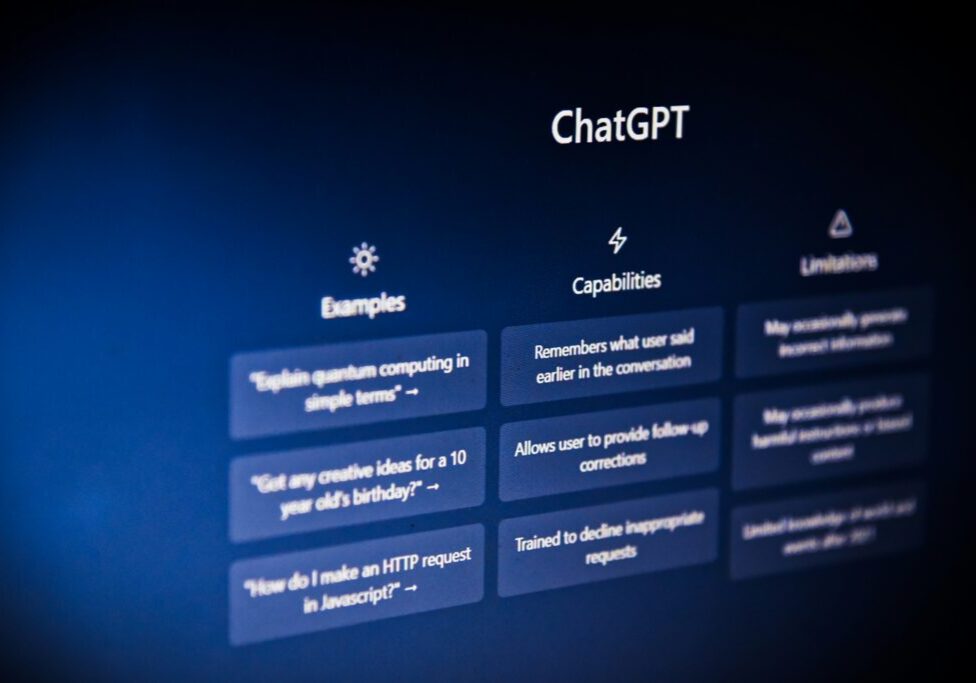
For many users, ChatGPT feels like a private sounding board: a place to test ideas, explore legal questions, analyze disputes, or think through strategy.
As generative AI becomes more common in legal practice, lawyers and clients must confront its ethical and practical implications in litigation.
This raises a new and increasingly important question: could your ChatGPT conversations one day become evidence in court?
While no reported Canadian decision has yet compelled the production of a litigant’s ChatGPT chat history, the direction of Canadian law suggests that users should not assume AI conversations are immune from disclosure.
The Existing Legal Framework
Canadian courts may not yet have a developed body of case law dealing specifically with ChatGPT, but they do have well-established rules governing the admissibility and production of electronic evidence, including emails, text messages, social media posts, and online chat logs.
ChatGPT prompts and responses are electronic documents and may be discoverable.
Section 31.8 of the Canada Evidence Act defines an electronic document as data recorded or stored on any medium by a computer system or similar device that can be read or perceived by a person or another computer system, including any display, printout, or other output of that data.1
Courts have long treated digital communications and electronically stored records as documents for evidentiary purposes, and the devices that generate or store them as computer systems within the statutory framework.
A ChatGPT exchange is, in substance, another form of electronically stored information.
The Importance of Ko v. Li
One of the most notable recent Canadian decisions involving generative AI is Ko v. Li, 2025 ONSC 27662, followed by Ko v Li, 2025 ONSC 2965.
In this case, the Ontario Superior Court of Justice addressed court materials that cited non-existent authorities apparently generated by AI. Justice Myers strongly criticized the lawyers failure to verify the cited case law. It was strongly emphasized that lawyers remain responsible for everything filed with the court.
For example, the Ontario courts now require lawyers and self-represented litigants filing a factum to certify the authenticity of every cited authority, a measure aimed in part at addressing AI-generated false citations.
While Ko v Li did not address the production of a party’s ChatGPT chat history, it demonstrated that Canadian courts already view AI-generated material as legally significant and subject to scrutiny.
Canadian courts have routinely admitted electronic communications to prove state of mind, knowledge, intent, credibility, and chronology. A ChatGPT transcript may contain exactly those kinds of admissions or contemporaneous statements.
The lesson is straightforward. AI-generated content does not sit outside the ordinary rules of evidence, procedure, or professional responsibility.
Discovery Rules Already Reach Digital Records
Canadian civil litigation is already governed by broad documentary discovery obligations.
Parties are generally required to disclose relevant, non-privileged documents within their possession, control, or power. That obligation already extends to electronically stored information such as emails, text messages, databases, cloud documents, and other digital records.
Furthermore, parties must consult with one another regarding electronic discovery and must have regard to The Sedona Canada Principles, which state that electronically stored information is discoverable.
As AI platforms are increasingly integrated into personal and professional decision-making, it is difficult to see why relevant AI conversations would be categorically excluded from those same principles.
The fact that an exchange occurred with an AI system rather than another person does not, by itself, make it irrelevant.
A Common Misunderstanding: Privilege
Some users mistakenly assume that discussing a legal problem with ChatGPT creates protections similar to solicitor-client privilege.
That assumption is dangerous.
Solicitor-client privilege protects confidential communications between a client and a lawyer for the purpose of obtaining legal advice. Conversations with an AI platform typically do not fall within that traditional framework.
As a result, users should not automatically assume that sensitive information disclosed to an AI system will receive the same protection as communications with legal counsel.
In some circumstances, AI-assisted research, draft arguments, or strategy materials created for the dominant purpose of existing or anticipated litigation may engage litigation privilege. Even then, protection may depend on preserving confidentiality, particularly where prompts, outputs, or usage logs are stored on third-party platforms with unclear data retention, protection or access policies.
A recent U.S. decision points in this same direction.
In United States v. Heppner, a judge of the Southern District of New York held that a criminal defendant’s exchanges with Anthropic’s Claude, used to develop defense-related arguments after receiving a grand jury subpoena, were not protected by attorney-client privilege or work product.
With respect to litigation privilege, the Court found that the AI tools terms provided that the chat history would be retained, analyzed, and used for training purposes, and subject to possible disclosure to several third parties, including governmental regulatory authorities.
Although this a U.S. criminal law decision, it highlights important considerations which may provide guidance to the Canadian courts. In the future, the court may be reluctant to treat conversations with public AI tools as confidential legal communications simply because they concern legal strategy.5
What Lawyers and Clients Should Consider
Lawyers increasingly rely on AI tools for:
- Drafting correspondence
- Analyzing contracts
- Reviewing policies
- Conducting research
- Developing litigation strategies
- Preparing internal reports
It has also become more common for clients to ask ChatGPT to synthesize, summarize and, in the case of self-represented litigants, formulate legal advice and/or arguments. While legal advice is sometimes confusing, and clients may want a second opinion, entering their lawyer’s legal advice, relevant legal information, and/or legal documents into ChatGPT has potential risks in court.
Each of those uses can create a discoverable record.
If litigation follows, opposing parties may seek access to the AI-assisted communications that informed another party’s legal decisions.
There is also a preservation issue. Once litigation is reasonably anticipated, parties may have to preserve potentially relevant electronically stored information, including AI-generated records. Deleting relevant AI conversations after that duty arises could create the same spoliation (i.e. the intentional destruction, alternation, mutilation, or concealment of evidence) issues that already exist for emails, texts, and other digital evidence.
The Practical Takeaway
In sum, while there are yet to be any reported Canadian decisions on the production of a party’s ChatGPT history, this issue remains a hot topic for litigators and clients alike. In any case, it is an issue that users should be alive to now, as its use becomes more prominent. The implications of its use are closer than we think.
Canadian courts have already shown a willingness to scrutinize AI-generated material, most notably in Ko v. Li as referenced above. At the same time, established discovery and evidentiary principles continue to permit the production and admission of relevant electronic communications.
One area in which the Canadian courts are already addressing the implications of AI is through the development of emerging judicial guidance, issuing notices and practice directions requiring parties and counsel to disclose or carefully verify the use of generative AI in filed materials. This does not make AI use improper, but it does confirm that AI-assisted content remains subject to ordinary standards of accuracy, accountability, and procedural fairness.
The safest practical assumption is this: If a ChatGPT conversation relates to a current or anticipated dispute, there is a real possibility it could become relevant evidence.
These exchanges may feel informal or private. Legally, however, they may be treated much like emails, text messages, and other digital records that routinely make their way into court.
As AI becomes a routine part of personal and professional decision-making, users would be wise to remember a basic principle of modern litigation: If you create a digital record, there is always a possibility that someone will eventually ask to see it.

Nicole Harris
Litigation Associate supporting the firm’s estate and civil litigation files, with a focus on legal research, pleadings, and motion preparation.